This is the post we've been building toward all month, and it's the one where getting it exactly right matters more than anywhere else we've written. Sun protection isn't a wellness preference. It's a genuine safety question, tied directly to sunburn risk and, over years of exposure, skin cancer risk. That's not a category where we're willing to let a product page's language run ahead of what's actually been tested.
So this post does two things. First, it explains the real, well-established science behind mineral and chemical sunscreen filters, what each one is, how each one works, and what current research and regulation actually say about them. Second, and just as important, it tells you plainly where our own Sun Balm fits into that picture and where it doesn't. If you've seen language on our site or anywhere else describing that product as a "sunblock" or as offering "broad-spectrum protection," we want to correct that directly here, because that language got ahead of what we can actually back up, and we'd rather fix it in plain view than quietly edit a product page and hope nobody noticed the difference.
What actually makes something a sunscreen, legally and scientifically
In the United States, sunscreen is regulated by the FDA as an over-the-counter drug, not a cosmetic. That distinction matters enormously. A cosmetic can describe how a product feels or looks. A drug claim, protecting against sunburn, offering broad-spectrum protection, stating an SPF number, requires the product to be formulated, tested, and labeled according to FDA's sunscreen monograph, the regulatory framework that governs which ingredients can be used, at what concentrations, and what testing has to happen before a specific protection claim can legally appear on a label.
Worth knowing briefly: this monograph has an unusually long and unresolved regulatory history. A version was finalized back in 1999 but never actually took effect, stayed indefinitely while outstanding questions got worked through. A major proposed update came in 2019, and the rulemaking process around it has continued in stages since, with the FDA still working through public comments and phased orders rather than a single, final, settled rule. We mention this not to bury you in regulatory history, but because it's part of why you'll sometimes see conflicting summaries of "what's approved" online. The core facts relevant to this post, which ingredients are currently recognized as safe and effective and which require further data, have stayed consistent across that process even while the finer regulatory details continue to evolve.
The SPF number itself comes from a standardized human test: applying the product at a fixed, defined amount, generally 2 milligrams per square centimeter of skin, comparing how long it takes unprotected skin to redden against how long it takes treated skin to redden, under controlled UV exposure from a calibrated light source. If unprotected skin starts to redden after roughly ten minutes and treated skin takes 300 minutes under the same exposure, that's an SPF of 30. That number isn't a formula calculated from the ingredient list, and it isn't estimated from how an ingredient behaves in a lab dish. It's measured, on real human skin, using a specific, standardized testing protocol, and it's the only thing that actually tells you what a product's real-world protection level is.
This is worth sitting with for a moment, because it's the single most important idea in this whole post, the one everything else here is really building toward: an ingredient having a UV-related property in a lab setting is not the same thing as a finished product being tested and proven to protect skin at a specific, reliable level. Those are two entirely different claims, and the gap between them is exactly where a lot of "natural sunscreen" marketing, across the whole industry, gets into trouble.
Mineral filters: zinc oxide and titanium dioxide
Mineral, or physical, sunscreen filters work primarily by sitting on top of the skin and reflecting and scattering UV radiation, with some genuine absorption happening as well. Zinc oxide and titanium dioxide are the only two ingredients in this category, and they're also the only two sunscreen active ingredients that the FDA currently recognizes as GRASE, generally recognized as safe and effective, without additional safety data required, at concentrations up to 25 percent. That's a meaningfully strong regulatory position, and it's part of why mineral sunscreens have become the default recommendation for children, pregnant people, and anyone with sensitive or reactive skin.
Zinc oxide specifically provides strong, genuinely broad-spectrum coverage across both UVB, the shorter wavelength primarily responsible for sunburn, and UVA, the longer wavelength that penetrates deeper into skin and is more associated with premature aging and long-term skin damage. That broad coverage, combined with its long safety track record, is why it's the filter most frequently used in reef-conscious and sensitive-skin sunscreen formulations, and it's the category the FDA specifically points parents toward for children under six months old, alongside shade and protective clothing, since sunscreen generally isn't recommended for infants that young at all.
A quick word on "reef-safe," since it tends to travel alongside mineral sunscreen marketing: it's a widely used term with no single regulated legal definition, similar in spirit to "natural" or "clean." What is genuinely well-supported is that certain chemical filters, oxybenzone and octinoxate specifically, have been linked to coral reef stress in research, which is why some destinations restrict them. That's a real, specific finding about two named ingredients, not a blanket scientific verdict that all mineral filters are reef-safe and all chemical filters aren't, and it's worth reading "reef-safe" on a label as a marketing shorthand rather than a certified claim.
The tradeoff people notice most with mineral filters is the visible white or grayish cast some formulations leave behind, though non-nano and specially processed particle sizes have narrowed that gap considerably compared to older mineral sunscreen formulas.
It's worth being precise about what "non-nano" actually means here, since it shows up on our own ingredient list and deserves an honest explanation rather than an assumed one. Zinc oxide particles can be manufactured at different sizes; non-nano simply means the particle size falls above the nanoscale threshold, generally understood as remaining on the skin's surface rather than being small enough to raise theoretical questions about deeper penetration. The FDA has specifically stated it isn't proposing different regulatory treatment for nano versus non-nano forms of zinc oxide and titanium dioxide, since the available safety data hasn't shown a meaningful difference between them. Non-nano is often chosen for consumer reassurance and formulation preference rather than because regulators have flagged nano forms as unsafe.
Chemical filters: how they work and where the science actually stands
Chemical, or organic, sunscreen filters work differently: they absorb UV radiation and convert it into a small amount of heat, which is then released from the skin. Common examples include avobenzone, octinoxate, octisalate, octocrylene, and homosalate, each with its own slightly different absorption profile across the UV spectrum. These tend to be more cosmetically elegant than mineral filters, thinner, faster-absorbing, and less prone to leaving a visible cast, which is part of why they show up so often in daily-wear facial sunscreens and makeup with SPF included.
Here's where we want to be precise rather than alarmist, because this is an area where a lot of "clean beauty" marketing overstates what's actually been established. In 2019, the FDA proposed updated rules reviewing all sixteen sunscreen active ingredients that had been marketed under an older monograph. It confirmed zinc oxide and titanium dioxide as GRASE. It found two rarely used ingredients, PABA and trolamine salicylate, not GRASE due to safety concerns. For the remaining twelve, including avobenzone, oxybenzone, octinoxate, and the others commonly found in chemical sunscreens, the FDA's actual position is that there isn't yet sufficient safety data to make a final determination either way. That's a meaningfully different statement than "found unsafe" or "banned," and it's worth being accurate about the distinction: it's an open question the agency is actively requesting more research to close, not a settled finding against these ingredients. Products containing them remain legal and widely sold, and they've been used for decades without evidence of the kind of serious harm that would justify pulling them from shelves outright.
Separately from human safety, some individual chemical filters, oxybenzone and octinoxate specifically, have been restricted in certain locations, including parts of Hawaii and some Caribbean destinations, over concerns about coral reef impact rather than human health. That's a real, distinct issue worth knowing about if you're picking a sunscreen for a trip to a reef-sensitive destination, and it's a separate conversation from whether these ingredients are safe to use on your own skin.
Why "contains zinc oxide" is not the same claim as "is a tested sunscreen"
This is the part that connects directly to what we need to tell you about our own product, so we want to walk through it carefully.
Zinc oxide is a real, legitimate, FDA-recognized sunscreen active ingredient. That much is true and well-established, and it's worth being clear that nothing in this post is meant to cast doubt on zinc oxide itself as a filter. But zinc oxide being present in a product's ingredient list is not, on its own, evidence of what level of protection that finished product actually provides. Several things have to be true beyond simple presence: the concentration has to be high enough to matter, generally in the range that's actually been tested to produce a specific SPF value, the ingredient has to be evenly and stably dispersed throughout the formula so there aren't gaps in coverage, and the finished product, as actually formulated, has to go through the standardized human testing described earlier to produce an actual, verified SPF number.
A balm containing some amount of zinc oxide, without a disclosed concentration and without SPF testing on the finished formula, is in a fundamentally different category than a sunscreen that states "SPF 30, broad spectrum" on a Drug Facts label. The ingredient might be doing something. Nobody, including us, can currently tell you how much, because that's precisely the question SPF testing exists to answer, and it hasn't been asked of this specific product.
The "natural SPF" myth, and why it matters here specifically
This pattern shows up constantly across natural and DIY skincare content, and it's worth understanding because it's exactly the trap that untested "natural sunscreen" products fall into.
Carrot seed oil is the clearest example. For years, blogs and social media posts have circulated a claim that carrot seed oil provides an SPF of 38 to 40, all tracing back to a single 2009 study. What that study actually tested was a multi-ingredient product that included carrot seed oil among other components, using an in-vitro method, meaning a lab measurement of how much light a sample absorbs in a dish, not a real human in-vivo SPF test on actual skin. The specific "38 to 40" figure was never measured for carrot seed oil on its own, and it has never been replicated using real sunscreen testing standards. A 2016 review by researchers Gause and Chauhan looked specifically at common fixed oils, including coconut, olive, canola, and soybean oil, and found their actual UV-blocking effect was negligible, landing around an SPF of 1, essentially no meaningful protection at all.
The lesson here isn't that these oils are bad for skin. Several of them have real, legitimate roles as moisturizers or after-sun treatments, which is a genuinely different and much more modest claim than functioning as sun protection. The lesson is that a substance showing some UV-related property in a lab setting, or being anecdotally associated with sun protection online, is worlds apart from a finished, tested product with a verified SPF number. That gap is exactly where a lot of natural sunscreen marketing quietly oversells what it can actually prove, and it's the same gap we need to be honest with you about regarding our own Sun Balm. If you ever see a "natural SPF chart" listing specific numbers for oils or botanicals, treat it the same way: ask whether that number came from testing the finished product on human skin, or from a lab measurement of light absorption that never touched a real sunburn risk at all.
Where our Sun Balm actually fits
Our Sun Balm contains non-nano zinc oxide as one of its ingredients. What it does not have is a tested SPF value, a broad-spectrum designation earned through the standardized testing described above, or a Drug Facts panel confirming it meets the requirements to be marketed and relied upon as a sunscreen. That means we cannot honestly tell you what level of sun protection, if any, this specific product provides in real-world use, and neither can any product in a similar position, regardless of what ingredients are listed on it.
We want to be direct about this because it's the most important correction in this entire post: if you've seen this product described elsewhere, including in our own marketing, as a "sunblock" or as offering "broad-spectrum protection," that language outran what we can actually stand behind, and we're walking it back here plainly rather than leaving it in place while writing carefully around it. This isn't a small wording issue to us. Sun protection is a genuine safety decision, and we'd rather lose the cleaner-sounding product description than let anyone rely on this balm the way they'd rely on an actual tested sunscreen.
We know that's a harder thing to say about a product we sell than about a product we don't, and we thought about whether there was a softer way to phrase this that would still get the point across. There wasn't, not honestly. The whole reason we spent this month showing you real lab reports, real batch numbers, and real evidence grades is that we'd rather you trust the specific claims we make than trust us in general. This is exactly the moment that trust gets tested, on the one product in our entire catalog where the claim genuinely outran the paperwork, and the right response is to say so plainly rather than hope the topic doesn't come up.
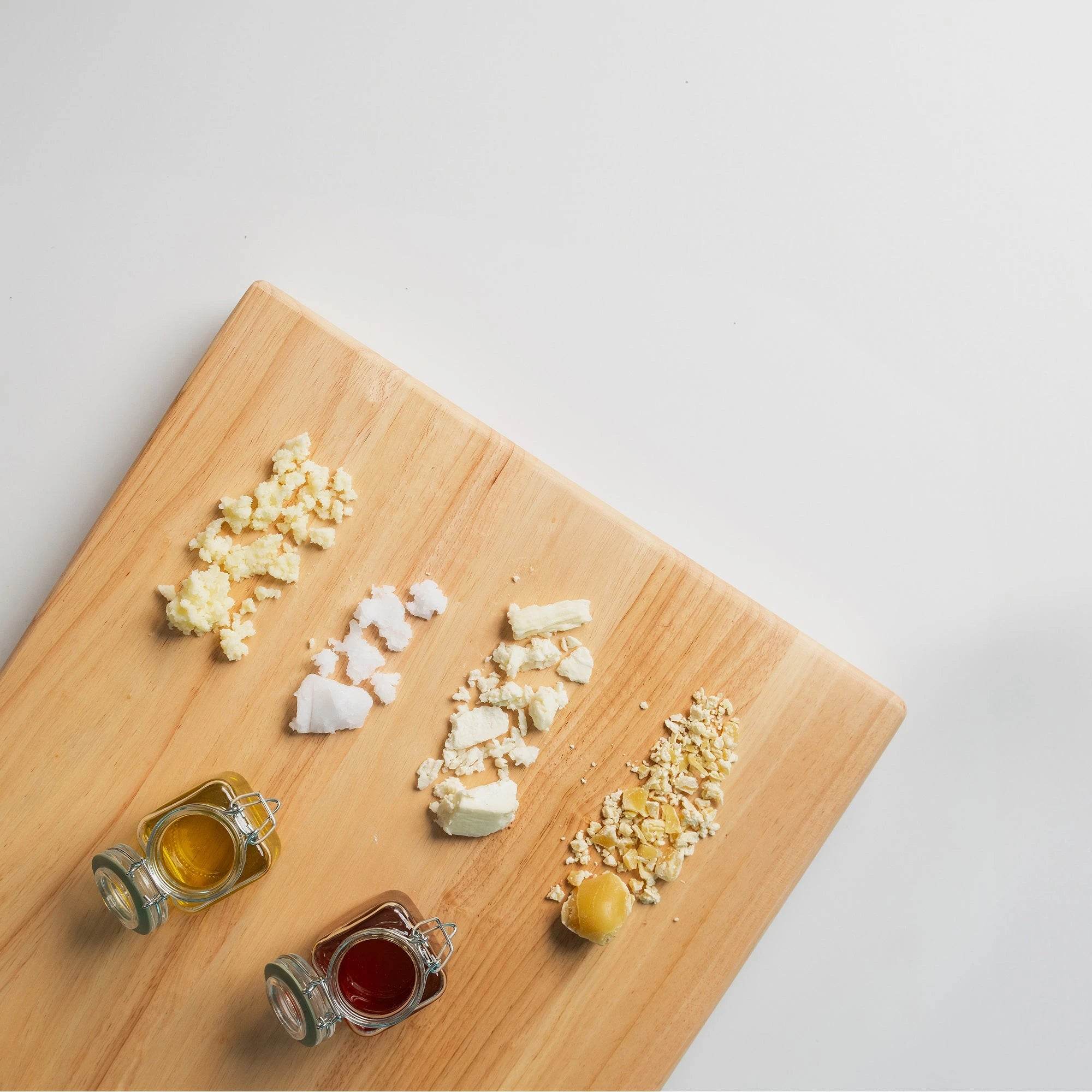
What we think this product is honestly good for is what we've written about elsewhere this month: a tallow-based balm with a fatty acid profile that has a real, plausible, if still under-researched, compatibility with skin's own lipid barrier, reasonably positioned as a moisturizing and barrier-support product, including as an after-sun balm once you're already out of direct sun exposure. Some customers have told us they like it for exactly that kind of soothing, hydrating use. That's a legitimate, honest role for this product to play. It is not the same role as sun protection, and we're not going to let the presence of zinc oxide in the ingredient list imply otherwise.
What to actually look for in a real sunscreen
If you need sun protection, and for any meaningful outdoor exposure, you do, here's what's actually worth checking on a label.
Look for the Drug Facts panel itself. Its presence is the clearest signal that a product has gone through the actual regulatory process required to make a protection claim, and it will list the specific active ingredients and their exact concentrations, not just an ingredient somewhere further down a cosmetic-style list. Look for "broad spectrum" stated explicitly, which confirms the product has been tested against both UVA and UVB, not just UVB. For daily use, SPF 30 or higher is the standard dermatological recommendation, and higher SPF numbers provide only incrementally more protection past a certain point, so chasing an extremely high number matters less than applying enough of what you have and reapplying it consistently.
Application amount is the detail almost everyone gets wrong, mineral, chemical, or otherwise. SPF testing is done at a specific, fairly generous application rate, and most people apply meaningfully less than that in real life, sometimes as little as a quarter to half of the tested amount, which quietly reduces the actual protection achieved well below the number on the bottle even when the product itself is perfectly legitimate. For full body coverage, that generally works out to roughly a shot glass, about an ounce, and for the face alone, more than most people assume, closer to a quarter to half teaspoon. Reapply every two hours, and immediately after swimming, heavy sweating, or towel drying, regardless of what the water-resistance claim says. Water resistance itself is always tested and stated for a specific duration, 40 or 80 minutes, and "waterproof" isn't a claim the FDA allows on any sunscreen label, because no formula holds up in water indefinitely, and implying otherwise would be its own kind of overstated claim.
The honest bottom line
Zinc oxide is a real, well-supported, FDA-recognized sunscreen ingredient, and mineral sunscreens built and tested around it are a genuinely excellent choice for a huge range of people, including exactly the sensitive-skin and family use cases our own audience cares most about. Chemical filters remain legal, widely used, and not established as unsafe, even though some of them are still working through an open regulatory data review rather than a fully closed one. And an ingredient's presence in a product, on its own, tells you nothing about that finished product's actual, tested level of protection, which is exactly the gap our own Sun Balm currently sits inside.
We'd rather tell you that clearly, in a post specifically about getting this right, than let ambiguous language keep doing work it was never tested to do. If you need sun protection today, reach for a tested, labeled sunscreen, mineral or chemical, whichever suits your skin, and use it generously and often. If you want a good moisturizing balm for after you've already been out in it, that's a conversation we're happy to keep having honestly, on this product and on everything else we make.