If you've spent more than ten minutes reading about shilajit online, you've probably come across some version of the at-home authenticity test. Drop it in cold water and watch it dissolve. Hold a flame under it and see if it bubbles. Press a small amount between your fingers and check how it behaves. Some of these have a grain of truth in them. Most of them have been so thoroughly co-opted by sellers of fake shilajit that they've become almost useless as filters.
The problem with the shilajit market isn't that there's no real product available. It's that there's an enormous amount of product that looks right, behaves right on the surface tests people know to apply, and still isn't what it claims to be. Adulteration is sophisticated enough in some cases that simple home tests don't catch it. And the consequence of taking unpurified or fake shilajit isn't just wasted money, it's a real contamination risk from a category of ingredient with a well-documented heavy metal problem if sourcing and processing aren't done properly.
So this post is going to cover what actually tells you something useful about shilajit quality, what the home tests are genuinely worth, what the home tests aren't worth, and what our own batch documentation looks like across the markers that matter.
Why this problem is bigger than most categories
Shilajit is one of the more heavily adulterated ingredients in the supplement space, and it's worth understanding why rather than just taking that as a given. A few things converge to make it especially vulnerable.
First, the raw material is genuinely scarce and labor-intensive to collect. Real shilajit is gathered from mountain rock faces at high altitude, often in remote regions, and the yield is limited. That scarcity creates a price floor for authentic product that's high enough to make adulteration economically attractive to sellers trying to compete on price.
Second, there's no universally recognized regulatory standard for what "shilajit" means on a label in the American supplement market. Unlike a pharmaceutical where the active ingredient must be present at a specified concentration, a supplement company can put "shilajit extract" on a label and fill the jar with something that's been heavily diluted, cut with inert materials, or derived from a different source entirely. Without independent testing, the buyer has no way to know.
Third, and most important: the visual and basic sensory properties of shilajit, the color, the texture, the general appearance, are easy to replicate synthetically or with cheap adulterants. Looking right and being right are not the same thing in this category, which is why home tests based on appearance and basic behavior are limited in what they can actually tell you.
There's also a market-structure problem worth naming: shilajit is sold across a wildly different price range on platforms like Amazon, from products in the low teens to products in the hundreds of dollars. The existence of both in the same search results, often with similar marketing language and similar claims, creates an impossible situation for a buyer trying to use price as a signal for quality. Cheap shilajit may still be genuine. Expensive shilajit may still be adulterated. Price is genuinely unreliable in this category in a way that it isn't for, say, a simple protein powder where the raw material costs are more predictable and the adulteration risk is considerably lower. This is part of what makes independent documentation so important here specifically: the signals that work in other supplement categories simply don't carry the same weight.
The tests that tell you something real
Let's start with the physical properties that do carry genuine signal, calibrated honestly about how much signal.
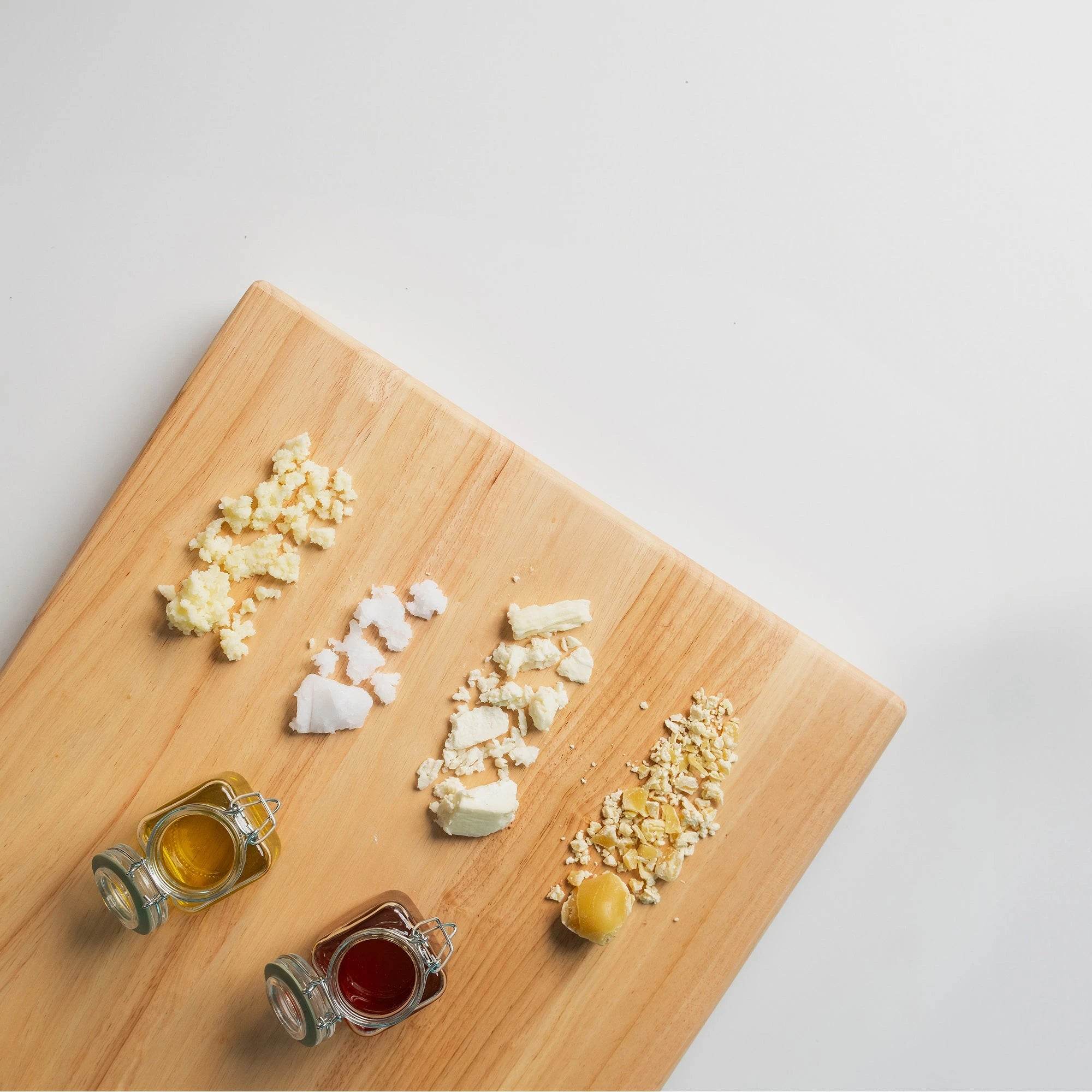
The temperature behavior test. Genuine resin-based shilajit hardens in cold temperatures and softens or becomes pliable when warmed. This is a real physical property of the material, a consequence of its resinous composition, not a marketing claim. If you put your shilajit in the refrigerator overnight and it remains soft and sticky regardless of temperature, that's not consistent with a high-resin product. If it firms up noticeably in cold and becomes workable again at room temperature or when warmed slightly in your hands, that's consistent with the expected behavior of genuine material.
The important caveat: this test is useful for ruling things out more than ruling things in. Some processed or adulterated shilajit can still exhibit similar temperature-dependent behavior, particularly if it's been partially mixed with a waxy or resinous carrier. Passing this test doesn't confirm authenticity. Failing it is a meaningful red flag, particularly if the product also fails the taste test and doesn't dissolve the way you'd expect.
The dissolving behavior test. Real shilajit, particularly a properly purified resin or powder, dissolves in warm water and produces a golden-brown to dark reddish-brown solution. It doesn't leave large undissolved clumps behind, and the color of the water changes noticeably and somewhat uniformly rather than looking like dye swirling through clear liquid. Fake shilajit often dissolves too cleanly, too quickly, or produces a color that looks artificially added rather than pulled from the material itself.
Again: useful signal, not a definitive test. But combined with temperature behavior and the taste test below, it contributes to a picture.
The taste test. Real shilajit has a flavor profile that's hard to describe politely: strongly bitter, mineral-heavy, with an earthy and slightly tar-like depth. It's not pleasant in the way a flavored supplement is. It's not neutral. If your shilajit tastes like nothing, or tastes primarily sweet, or has an obvious artificial note to it, those are meaningful red flags. The bitterness comes from the fulvic and humic acids that make up a significant portion of quality material, and those don't disappear in properly processed product.
Our batch documentation explicitly tests taste against a specification. The result: "Bitter, tart," confirming against the expected characteristic profile. That's not us describing our product. That's what a lab recorded as the result of a physical evaluation against a defined standard.
The tests that are mostly theater
The fire test. You'll see videos where shilajit is supposed to bubble or behave a specific way when exposed to a flame. This test tells you almost nothing useful under normal conditions, and it's dangerous on top of being unreliable. We're not recommending it. The information it provides is so ambiguous and context-dependent that it's genuinely not worth treating as a filter.
The color test alone. Real shilajit ranges from dark brown to black. So does a range of other substances, and so can an adulterated product with colorants added. Color is not a useful standalone criterion.
The "it dissolved cleanly" test. Some people interpret very clean dissolution as a sign of purity. It can be the opposite: highly processed or synthetic material may dissolve more cleanly than a genuine, complex organic substance because there's less real complexity in it.
The issue with all of these is that they're surface-level assessments of a product that can be manufactured specifically to pass them. A sophisticated counterfeit is designed with these home tests in mind, not despite them.
What actually tells you something definitive
The only genuinely reliable way to know whether what you have is real, pure, and safe is laboratory testing. Specifically: fulvic acid content, heavy metal panel, and an authenticity test run against a defined standard.
Fulvic acid percentage. This is the most commonly cited quality marker in shilajit, and for good reason. Fulvic acid is one of the primary active components of genuine shilajit, and it's the compound associated with most of the physiological properties that make the ingredient interesting to researchers. Quality shilajit generally tests in the range of 60 to 80 percent fulvic acid. Products testing significantly below that range, say under 20 or 30 percent, are either low-grade material, heavily diluted, or not primarily composed of real shilajit. Sellers of adulterated product typically don't publish fulvic acid results because those results would immediately identify the problem.
It's also worth knowing that shilajit comes in a few different forms: raw resin collected directly from rock faces, purified resin that's been processed to remove contaminants, and powder made from spray-dried or processed material. The fulvic acid content can differ across these, and neither form is automatically superior, but a powder product should still be tested and have a fulvic acid result on record, not just assumed to be equivalent to a resin-based product from the same source. Our own product is a powder, and the 72 percent fulvic acid result is on the powder specifically, not assumed from a resin calculation.
Heavy metal testing. This is the non-negotiable safety test for shilajit specifically, more than almost any other supplement ingredient, because the raw material is genuinely at risk of heavy metal contamination from soil and rock. Lead, arsenic, cadmium, and mercury are the four markers that matter most, and they should all come back well within established safety limits on a properly sourced and purified product. A clean heavy metal result doesn't tell you the shilajit is authentic, but a failed result or an absent result tells you something is seriously wrong.
Authenticity testing. Laboratory authentication of shilajit involves a combination of organoleptic evaluation (taste, color, consistency checked against defined specifications), chemical composition analysis, and in some cases spectroscopic methods to confirm the expected molecular profile. Our batch documentation includes an explicit authenticity test result: "Authentic." It was tested against defined specifications covering taste, color, and composition, and it conformed to expected authentic shilajit characteristics.
What our batch documentation actually shows
Our shilajit comes from the Kosh-Agach district of the Republic of Altai in Russia, a high-altitude mountainous region with documented shilajit collection history. The batch went through a full technical analysis that covers more ground than most shilajit products ever see.
Fulvic acid came back at 72 percent. Humic acid at 8.3 percent. Moisture at 4 percent. Those numbers, particularly the fulvic acid, place it firmly in the range of quality, properly processed material rather than diluted or adulterated product.
Heavy metals: lead at 0.67 milligrams per kilogram against a permissible level of 6. Cadmium at 0.12 against a limit of 1. Arsenic at 0.08 against a limit of 12. Mercury under 0.01 against a limit of 1. All four sitting well inside the safety margins, not just technically passing but passing with real room to spare.
Beyond the safety markers, the analysis ran a complete mineral and amino acid profile: potassium at 42,300 milligrams per kilogram, calcium at 24,800, magnesium at 1,958, iron at 240, with a full amino acid panel across alanine, arginine, proline, glycine, tyrosine, and more. This is what actual shilajit looks like at a chemical level: a complex, mineral-dense material with an amino acid profile that reflects its plant-matter origin over geological time. A synthetic or heavily adulterated product doesn't have this profile, because it can't, the profile isn't something that gets added, it's something that accumulated over centuries of decomposition under pressure.
Microbial testing covered pathogenic bacteria including salmonella, coliform bacteria, and Staphylococcus aureus, all absent. Yeast and mold not detected. Radionuclide testing for strontium-specific activity came back under 3 becquerels per kilogram. Radionuclide screening is rarely done on shilajit products in the US market. It's done on ours because sourcing from a mountain range in Russia makes it the right thing to check, and because the result being clean is information worth having rather than a question better left unanswered.
Why the hardening question specifically kept coming up
We mentioned the cold-temperature hardening behavior in our previous shilajit post, and it's worth addressing directly because it's a real question customers have brought to us. When shilajit arrives and it feels harder than expected, or when it firms up after sitting in a cool environment, that's not a defect or a sign that something went wrong in shipping. It's the opposite: it's one of the clearest physical behaviors consistent with genuine resinous shilajit rather than a heavily processed, additive-laden imitation.
The reason some people expect shilajit to be uniformly soft and pliable regardless of temperature is that a lot of what's sold in the US market is either processed in a way that eliminates this property, or is something other than resin-based shilajit in the first place. Soft always, regardless of temperature, is actually the more suspicious behavior for a genuine product. Firm in cold, workable at room temperature or when warmed slightly, is what the real material does, and it's what ours does.
If yours has hardened and you're trying to use it: warm the jar briefly in warm water, not hot, just warm, and the material will become soft and scoopable again. The compound inside hasn't changed. The temperature behavior is the physical property working as expected.
None of what we've described here is something you can verify at home with a flame or a glass of cold water. The tests that actually answer the authenticity question require a laboratory. We understand that most people aren't going to commission their own independent testing on every supplement they buy. That's not a realistic expectation.
What it does mean is that for an ingredient like shilajit, where the quality gap between real and fake is enormous and the home tests are limited, the responsibility sits with the brand to do the testing and then actually show you the results rather than just tell you the product is genuine. We've shared the full breakdown here rather than summarizing it with a "lab tested" badge, because a badge is exactly the kind of thing a seller of adulterated product can also put on their label.
What to look for in a brand's documentation
If you're evaluating any shilajit product, including ours, a few specific things are worth asking for rather than accepting reassurance in place of them.
A published fulvic acid percentage with a lab report attached. Not "standardized to contain fulvic acid" with no number, and not a number on the label without a document to back it up. The number and the document together are the unit of useful information, not either one on its own.
A heavy metal panel covering lead, arsenic, cadmium, and mercury, with specific result values rather than just a "pass" stamp. A pass result without the underlying numbers tells you the test happened but nothing about how close to the limit the result actually was. Results well below the limit are what you want to see.
A batch or lot number on the certificate that corresponds to the specific product in front of you. A COA posted on a website with no batch number, or the same certificate appearing unchanged for years, isn't batch-level verification. It's a document that may have nothing to do with what's actually in the jar you're holding.
Some indication of where the shilajit was sourced from, with enough specificity to be meaningful. "Himalayan" is a region. "Kosh-Agach district, Republic of Altai" is a specific enough origin that someone could verify it as a known shilajit source. The specificity is a signal.
The practical ask
None of what we've described here is something you can verify at home with a flame or a glass of cold water. The tests that actually answer the authenticity question require a laboratory. We understand that most people aren't going to commission their own independent testing on every supplement they buy. That's not a realistic expectation.
What it does mean is that for an ingredient like shilajit, where the quality gap between real and fake is enormous and the home tests are limited, the responsibility sits with the brand to do the testing and then actually show you the results rather than just tell you the product is genuine. We've shared the full breakdown here rather than summarizing it with a "lab tested" badge, because a badge is exactly the kind of thing a seller of adulterated product can also put on their label.
The fulvic acid is 72 percent. The heavy metals are clean across all four markers. The authenticity test came back authentic. The mineral profile is consistent with genuine material from a high-altitude source. That's what we have, and it's what we're pointing to, not a set of home tests we're asking you to run on your own and trust the results of.
If you're evaluating a shilajit product from any brand, including ours: ask for the fulvic acid percentage, ask for the heavy metal results across all four standard markers, and ask whether there's an authenticity test on record. If those documents exist and are specific to the batch you're holding, that's a meaningful answer. If you get "we test all our products" with nothing attached to it, that's not an answer. It's the absence of one dressed up to sound like the real thing.
That's exactly the problem in this category, and it's exactly why we think showing you the paperwork matters more than describing what the paperwork would say if you could see it.
One last thing worth saying directly, because this post has been largely critical of a category we sell within: we're aware of what it looks like to write an honest rundown of how widespread the authenticity problem is and then sell our own product in the same breath. The only real answer to that tension is the documentation, not the disclaimer. If what we're saying about the importance of lab verification is true, then we should be held to the same standard we're describing, and the batch results above are the substance of that claim rather than a supplement to marketing language that sounds good without proving anything.
If the numbers check out, we earn the trust. If they don't, we shouldn't have it. That's the standard we're trying to operate by, and it's the same standard we'd encourage you to apply to every shilajit product, ours included, every time a new batch is what you're actually opening.